 Reviews


 Proudly American


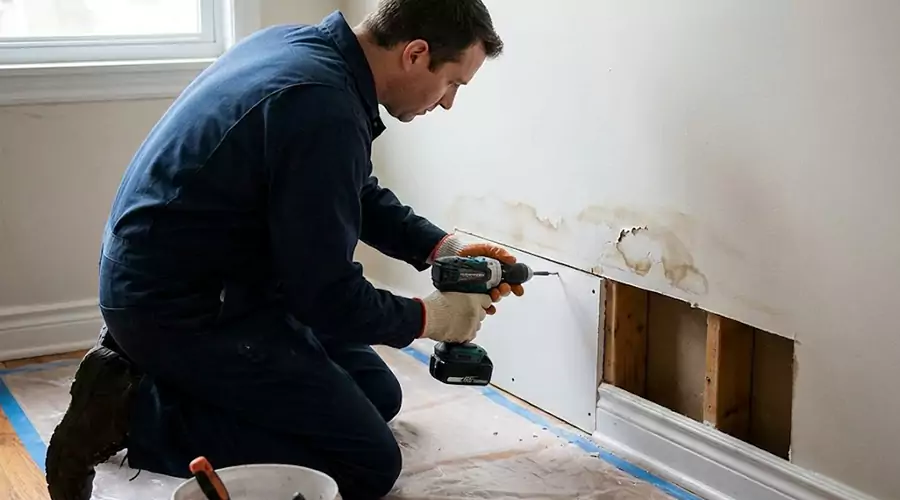
Water-damaged drywall can sometimes be saved when the water is clean, the exposure is brief, and the material remains structurally firm. Drywall usually needs replacement when it becomes soft, swollen, crumbling, contaminated, or affected by mold.
The decision should not be based only on surface appearance. Moisture can remain inside the gypsum core, behind paint, around insulation, and within the wall cavity after the outside feels dry.
How Drywall Reacts to Water?
Drywall consists of a gypsum core covered by paper facing. The gypsum can absorb water, while the paper surface can trap moisture and provide material that supports mold growth.
A small splash or short plumbing leak may affect only the surface. Prolonged exposure can cause the core to lose strength, the paper to separate, and fasteners to pull through the softened material.
Ceiling drywall may become especially dangerous because saturated panels gain weight. A sagging or bulging ceiling can collapse and should not be touched or punctured without professional guidance.
When Wet Drywall May Be Saved
Drywall has a better chance of being restored when the water comes from a clean source. Examples include a recently broken supply line, an overflowing sink without contaminants, or rainwater that entered through a small opening and was addressed quickly.
The material should remain flat, firm, and securely attached. There should be no visible swelling, crumbling, mold, spreading stains, or separation between the paper and gypsum core.
Fast response also matters. Drywall that is inspected and dried soon after the incident is more likely to remain usable than material that stayed wet for several days.
Even when these conditions are present, moisture readings should confirm that the wall has dried. Touch alone cannot determine whether the center of the panel or the wall cavity is still wet.
When Drywall Should Be Replaced
Replacement is usually necessary when drywall has lost its shape or strength. Soft areas, sagging sections, bubbling paint, peeling paper, swollen seams, and crumbling edges indicate that the panel may no longer provide a stable finish.
Drywall exposed to sewage, floodwater, or another contaminated source should generally be removed. Porous building materials can absorb bacteria, chemicals, and organic matter that surface cleaning may not fully address.
Visible mold is another reason for careful removal. Cutting out only the stained surface may leave growth inside the wall cavity, on insulation, or along framing.
Firefighting water can also complicate the decision. Drywall may contain a mixture of water, soot, smoke residue, and contaminants from burned materials, which can make cleaning and odor control more difficult.
Why the Water Source Matters?
Restoration professionals often classify water according to the level of contamination. Clean water starts with a sanitary source, while gray or black water contains increasing levels of contaminants.
A clean-water loss can become more hazardous when it remains in contact with flooring, soil, waste, or dirty building materials. Time, temperature, and the surrounding environment can change the condition of the water.
This is why a wall affected by a supply-line leak may be treated differently from a wall exposed to a sewage backup. The amount of visible damage may look similar, but the sanitation risk is not the same.
How Professionals Inspect Water-Damaged Drywall?
A restoration technician begins by examining stains, seams, baseboards, outlets, and nearby flooring. Moisture meters can help compare affected drywall with dry materials in another part of the property.
Thermal imaging may reveal temperature differences that suggest moisture, but it does not directly measure water content. Suspicious areas should be confirmed with a moisture meter or a small inspection opening when appropriate.
The technician may also check the opposite side of the wall, nearby rooms, and the floor below. Water often follows framing, pipes, wiring, and gravity rather than staying directly beneath the visible stain.
Inspection should include insulation when the wall contains it. Wet insulation can slow drying and keep the back of the drywall damp even when the room-facing surface improves.
How Drywall Is Dried Without Removing It?
When the material is suitable for restoration, the first step is to stop the water source. The restoration team may then remove baseboards, open small sections, or create controlled access points to improve airflow inside the cavity.
Air movers increase evaporation at the wall surface, while dehumidifiers lower the moisture level in the surrounding air. Specialized wall-cavity drying systems may direct air behind the drywall.
The equipment should remain in place until repeated readings show that the affected materials have reached an acceptable level. Removing equipment too early can leave hidden moisture inside the assembly.
Paint and wall coverings can slow the process. Vinyl wallpaper, multiple paint layers, and moisture-resistant coatings may prevent water vapor from escaping efficiently.
Can Painted Drywall Still Be Restored?
Paint can protect drywall from brief surface contact, but it can also hide the extent of the damage. Bubbling, blistering, flaking, or discoloration may indicate that water has moved behind the coating.
A restoration professional may need to remove a small amount of paint or make an inspection opening. Repainting should wait until the drywall and wall cavity are confirmed dry.
Stain-blocking primer can address discoloration after the moisture problem has been resolved. Primer should not be used to conceal active moisture, mold, or damaged paper facing.
Water Damage Around Windows and Doors
Leaks around windows and doors often affect more than the visible drywall. Water may enter through flashing failures, damaged sealant, roof problems, or gaps in the exterior building envelope.
Replacing the interior panel without correcting the exterior entry point will not solve the problem. The opening, framing, insulation, and surrounding finishes should be inspected before new drywall is installed.
Repeated staining in the same area usually signals an unresolved source. Restoration should address both the wet material and the reason water entered.
Can Water-Damaged Ceiling Drywall Be Saved?
Ceiling drywall requires a more cautious approach because gravity places additional stress on wet panels. Minor staining from a brief leak may be dried when the panel remains firm, flat, and securely fastened.
Sagging, cracking, bulging, or dripping sections should be treated as unstable. Keep people and belongings away from the area and contact a qualified professional.
The source above the ceiling must also be inspected. Wet insulation, roof decking, plumbing lines, and floor systems can continue releasing moisture after the visible leak stops.
What Happens When Replacement Is Required?
The restoration team marks the affected area and removes damaged drywall in a controlled manner. The cut may extend beyond the visible stain so technicians can reach dry, stable material and inspect the cavity.
Wet insulation and contaminated debris are removed as needed. Framing is cleaned, dried, and checked before the wall is closed.
New drywall should not be installed until moisture readings confirm that the structure is ready. The replacement area is then finished, primed, painted, and blended with the surrounding surface.
Risks of Leaving Wet Drywall in Place
Wet drywall can weaken, release unpleasant odors, damage nearby finishes, and keep insulation or framing damp. It may also create conditions that support mold growth.
Covering the area with paint or installing trim before drying is complete can trap moisture. The problem may later appear as stains, peeling finishes, soft spots, or recurring odors.
A small opening and limited replacement are often less disruptive than repairing a larger area after moisture spreads. Early inspection helps property owners make that decision before the damage becomes more extensive.
Final Thoughts
Water-damaged drywall may be saved when the source is clean, the exposure is limited, and the panel remains firm and intact. Replacement is generally the safer choice when the material is contaminated, moldy, swollen, sagging, soft, or structurally weakened.
Professional moisture testing provides a more reliable answer than appearance alone. The goal is not simply to preserve the drywall, but to make sure the wall cavity is clean, dry, and ready for safe repairs.
